
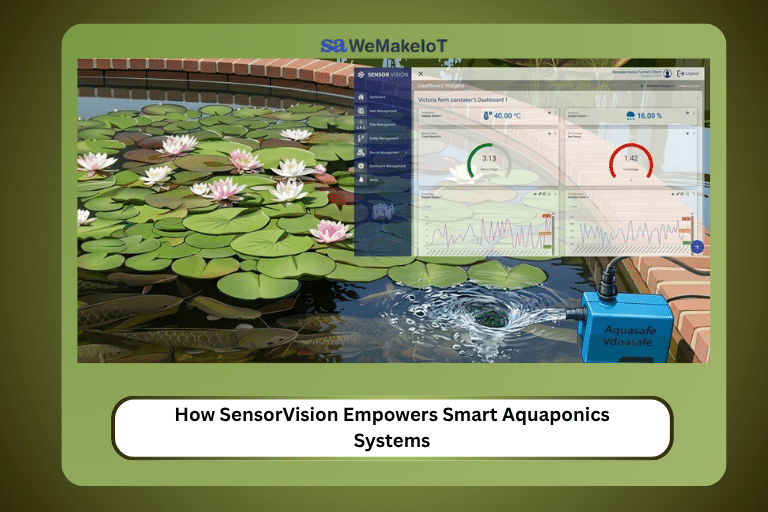
How SensorVision Empowers Smart Aquaponics Systems: Architecture and IoT Integration
Aquaponics merges aquaculture (raising aquatic animals like fish) with hydroponics (cultivating plants in water) in a symbiotic, closed-loop ecosystem. However, maintaining the delicate biological balance between fish health, bacterial nitrification, and plant nutrition requires constant, precision monitoring. Integrating a smart computer vision and IoT monitoring framework through comprehensive IoT solutions development transforms traditional aquaponic management into an automated, data-driven science.
The Role of SensorVision in Modern Aquaponics
Traditional aquaponic farms rely heavily on manual water sampling and reactive troubleshooting. Deploying an advanced smart aquaponics system powered by automated visual telemetry and IoT sensors solves these operational bottlenecks.
1. Computer Vision for Fish Health and Biomass Tracking
Manually estimating fish populations, measuring growth rates, and detecting early signs of disease is labor-intensive and inaccurate.
- Automated Stock Monitoring: High-definition cameras equipped with computer vision algorithms track swimming patterns, school density, and individual fish length/weight estimates without physical stress.
- Early Disease Detection: Visual processing algorithms identify anomalies such as erratic swimming behavior, skin discolouration, or fin damage, alerting farm operators before mortality rates spike.
2. Integrated IoT Telemetry & Water Parameter Tracking
Vision systems work best when synchronized with precise physical water chemistry metrics. Utilizing a reliable IoT technology stack, a robust aquaponics setup tracks vital parameters continuously:
- pH and Ammonia Levels: Automated probes monitor the nitrification cycle, ensuring toxic ammonia is safely converted into nitrates for plant absorption.
- Dissolved Oxygen (DO) & Temperature: Real-time sensor feeds trigger automated aeration or thermal controls to keep fish respiration optimal.
3. Automated Closed-Loop Controls
By feeding telemetry and computer vision data into a centralized control hub, the system automates corrective actions – such as adjusting automated fish feeders, modulating water flow pumps, or regulating nutrient dosing valves.
Transform Your Aquaponics System with SensorVision. Connect with us to learn more
Frequently Asked Questions (FAQ)
How does computer vision improve aquaponic fish farming?
Computer vision automates biomass estimation, tracks growth rates via non-invasive digital sizing, detects early disease symptoms through behavioral analysis, and optimizes feed conversion ratios by monitoring uneaten food particles.
What are the key IoT sensors required for a smart aquaponics system?
Essential sensors include pH probes, dissolved oxygen (DO) sensors, water temperature monitors, electrical conductivity (EC) meters for nutrient levels, and turbidity sensors to measure water clarity.
How do automated controls protect the aquaponic ecosystem?
When integrated IoT sensors detect a critical threshold breach (e.g., a drop in dissolved oxygen or a spike in ammonia), the system instantly triggers backup aerators, alerts operators, or pauses automated feeding routines to prevent total system collapse.
Related Resources
- How IoT is Transforming Aquaponics and Smart Farming in the UK
- SensorVision — IoT Platform for Aquaponics and Smart Agriculture
- LoRa & LoRaWAN — long-range wireless for farm and aquaponics deployments
- ESP32 IoT Development
Working on an aquaponics IoT project?
Whether you are building a new smart aquaponics product or looking to automate an existing facility, we are happy to discuss what you are trying to achieve and what the right technology approach looks like.